In many SMT factories, discussions usually focus on pick-and-place machines, printers, or reflow ovens. These machines are clearly important, but in real production, line efficiency is often determined by something much less visible — how PCBs move through the line.
From our daily communication with EMS factories and electronics manufacturers, we see the same situation again and again: even a high-end SMT line can suffer from frequent stops, manual intervention, or unstable output if peripheral equipment is not properly selected or configured.
SMT peripheral equipment plays a practical and sometimes underestimated role in keeping production running smoothly.
What SMT Peripheral Equipment Really Means
SMT peripheral equipment includes the machines that handle PCB transfer, buffering, and line connection during the SMT process. Their job is simple in theory: move boards from one process to the next. In practice, they are responsible for maintaining line rhythm, reducing operator involvement, and preventing unnecessary downtime.
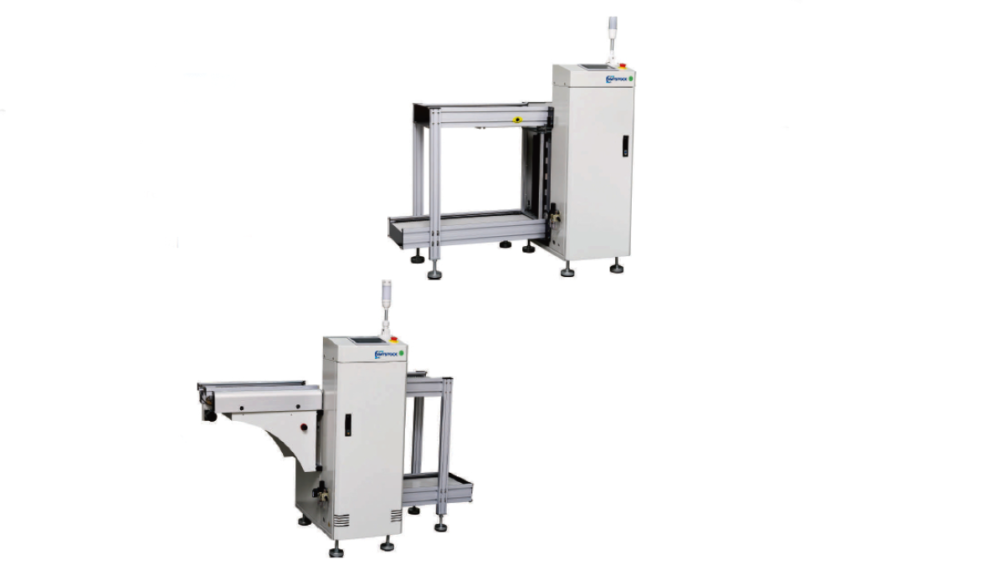
Typical SMT peripheral equipment includes PCB loaders, unloaders, buffer systems, conveyors, and magazine-based handling units. These machines do not add components or solder joints, but they strongly influence overall line stability.
PCB Loaders and Unloaders in Daily Production
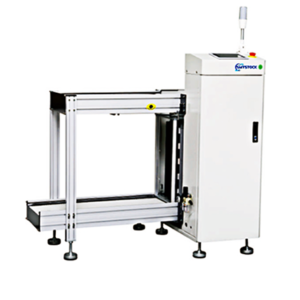
PCB loaders are used at the beginning of the SMT line to feed bare boards into the process at a controlled and repeatable speed. PCB unloaders collect finished boards after reflow or inspection and store them safely for the next process.
In factories running multiple shifts, loaders and unloaders help reduce repetitive manual handling and lower the risk of board damage or misplacement. More importantly, they help keep the line running at a predictable pace, which is essential for stable production planning.
Why Buffer Systems Matter More Than Expected
In theory, all machines in an SMT line should run at the same speed. In reality, this rarely happens. Printers, mounters, AOI systems, and reflow ovens all have different cycle times, and even small differences can cause line interruptions.
SMT buffer systems are designed to absorb these differences. By temporarily storing PCBs between processes, buffers help prevent upstream or downstream machines from stopping. Over time, this directly improves overall equipment efficiency and reduces unnecessary line downtime.
Different buffer types are used depending on production needs, such as FIFO buffers for controlled flow or pass-through buffers for simple line connections.
PCB Conveyors and PCB Flippers / Inverters
In addition to loaders, unloaders, and buffers, PCB conveyors (including pass-through conveyors and link conveyors) play a key role in connecting different machines within the SMT line. Their main task is to ensure smooth and stable PCB movement between processes without disrupting line rhythm.
Turn conveyors, also known as PCB flippers or PCB turning units, are used when board orientation needs to be changed due to line layout constraints or double-sided production requirements. These machines allow PCBs to be rotated or flipped automatically without manual handling.
In real production environments, PCB conveyors and PCB flippers / inverters help save floor space, reduce operator involvement, and maintain consistent board positioning throughout the line.
Peripheral Equipment and Line Balance
As SMT production moves toward higher automation and more flexible manufacturing, peripheral equipment becomes more critical. High-mix and low-volume production requires frequent changeovers, and without proper buffering and board handling, line balance becomes difficult to maintain.
Poorly matched loaders, buffers, or conveyors often become hidden bottlenecks. Even when core machines perform well, these weak points can limit real output and create avoidable delays.
Supporting Complete SMT Line Solutions
At SMTSTOCK, we often support customers not only with SMT machines and spare parts, but also with peripheral equipment that fits their existing lines. This includes new and used PCB loaders, unloaders, and buffer systems selected according to actual production conditions.
In many cases, small adjustments to peripheral equipment configuration can bring noticeable improvements to line stability and daily output.
For customers reviewing or upgrading SMT peripheral equipment such as PCB loaders, buffers, conveyors, and PCB flippers/inverters, more information can be found on our SMT peripheral equipment page. https://smtstock.com/product-category/smt-peripheral-equipment/pcb-handling-equipment/