Introduction
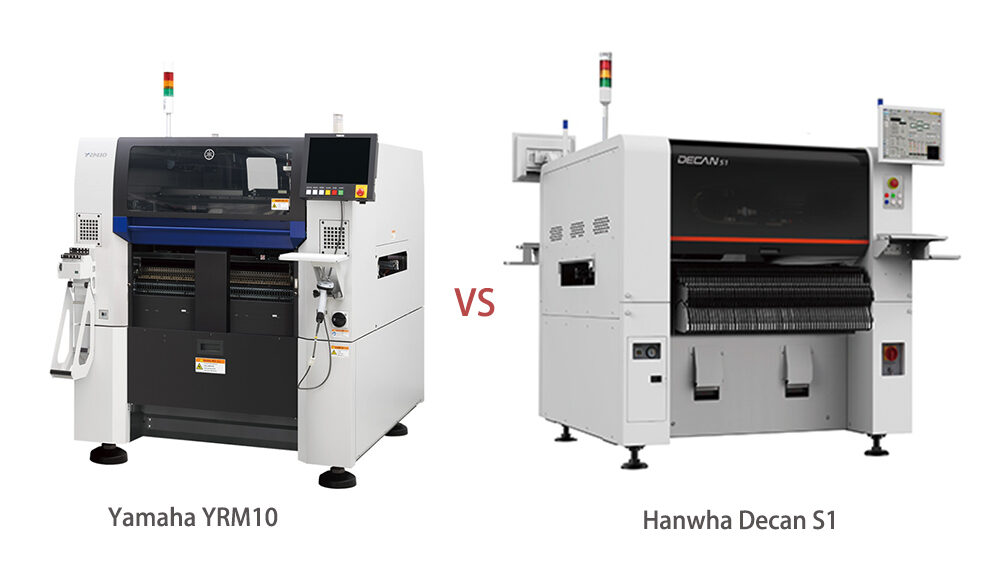
YRM10 vs Decan S1 is a common comparison for EMS factories choosing SMT machines.
When selecting a high-speed pick and place machine, many EMS factories compare the Yamaha YRM10 and Hanwha Decan S1. Both machines are widely used in SMT production lines, but they are designed with different priorities.
This article focuses on practical differences based on real production scenarios, helping engineers and buyers choose the right machine.
Basic Positioning of Both Machines
The Yamaha YRM10 is a high-speed modular placement machine designed for flexible and scalable SMT lines. It is typically used in medium to high volume production with frequent product changes.
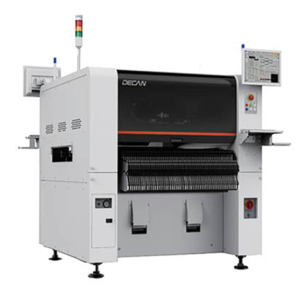
The Hanwha Decan S1, on the other hand, is known for its strong cost-performance ratio and stable operation. It is often selected by factories looking for reliable output with controlled investment.
Placement Speed and Productivity
From a specification point of view, both machines offer high placement speed. However, in real production:
-
YRM10 focuses on maintaining high efficiency during complex and mixed production
-
Decan S1 provides stable performance for standard and repetitive jobs
For lines with frequent changeovers, YRM10 may have an advantage in maintaining overall throughput.
Flexibility and Product Changeover
In modern SMT environments, flexibility is critical.
The YRM10 supports:
-
Faster program switching
-
Better feeder management
-
Easier adaptation to different PCB types
The Decan S1 is also capable, but is generally more suited for:
-
Stable product runs
-
Less frequent line adjustments
Ease of Operation and Software
Operators often find Yamaha’s software interface more intuitive, especially for:
-
Program editing
-
Line balancing
-
Data management
Hanwha systems are reliable and stable, but may require more operator familiarity in certain setups.
Spare Parts and Maintenance
Both machines have mature ecosystems for spare parts.
In practice:
-
Yamaha machines typically require consistent maintenance planning
-
Hanwha machines are known for lower maintenance cost and durability
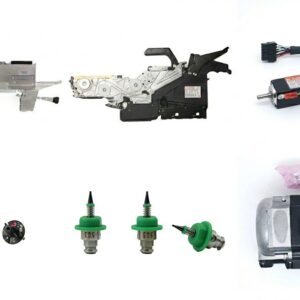
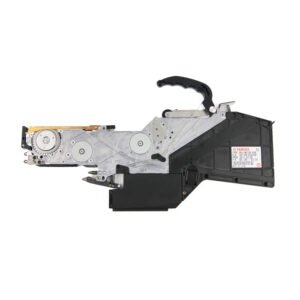
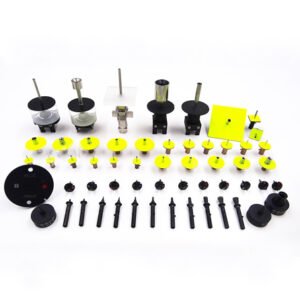
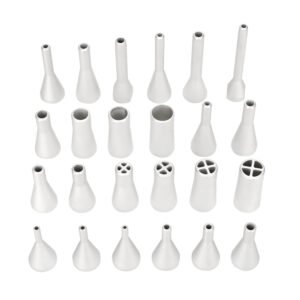
For long-term operation, access to feeders, nozzles, and technical support is more important than the machine itself.
Cost Consideration
This is often the key decision factor.
-
YRM10 usually comes with a higher initial investment
-
Decan S1 offers a more cost-effective solution
For factories with tight budgets or expansion plans, Decan S1 is often easier to justify.
Which One Should You Choose?
The decision depends on your production needs:
Choose YRM10 if:
-
You handle high-mix production
-
You need flexibility and faster changeovers
-
You focus on long-term productivity
Choose Decan S1 if:
-
You prioritize cost-performance
-
Your production is relatively stable
-
You want a reliable and straightforward setup
Conclusion
Both Yamaha YRM10 and Hanwha Decan S1 are proven SMT machines. The best choice depends not on specifications alone, but on how the machine fits your production environment.
Understanding your product mix, volume, and long-term plan is the key to making the right investment.
We supply both Yamaha and Hanwha SMT machines, including feeders and spare parts. Feel free to contact us for more details.